
A BLA (biologics license application) is the request to market a biological product, such as an antibody, vaccine or cell therapy, under section 351 of the Public Health Service Act; an NDA (new drug application) is the request to market a new drug, usually a small molecule, under section 505 of the Federal Food, Drug, and Cosmetic Act. Generic copies use the ANDA, and copies of biologics use the 351(k) biosimilar pathway.
This guide compares all five pathways in one table, then covers the facility inspection each one triggers, with Atlas counts of complete response letters and FDA inspection outcomes as of October 2026.
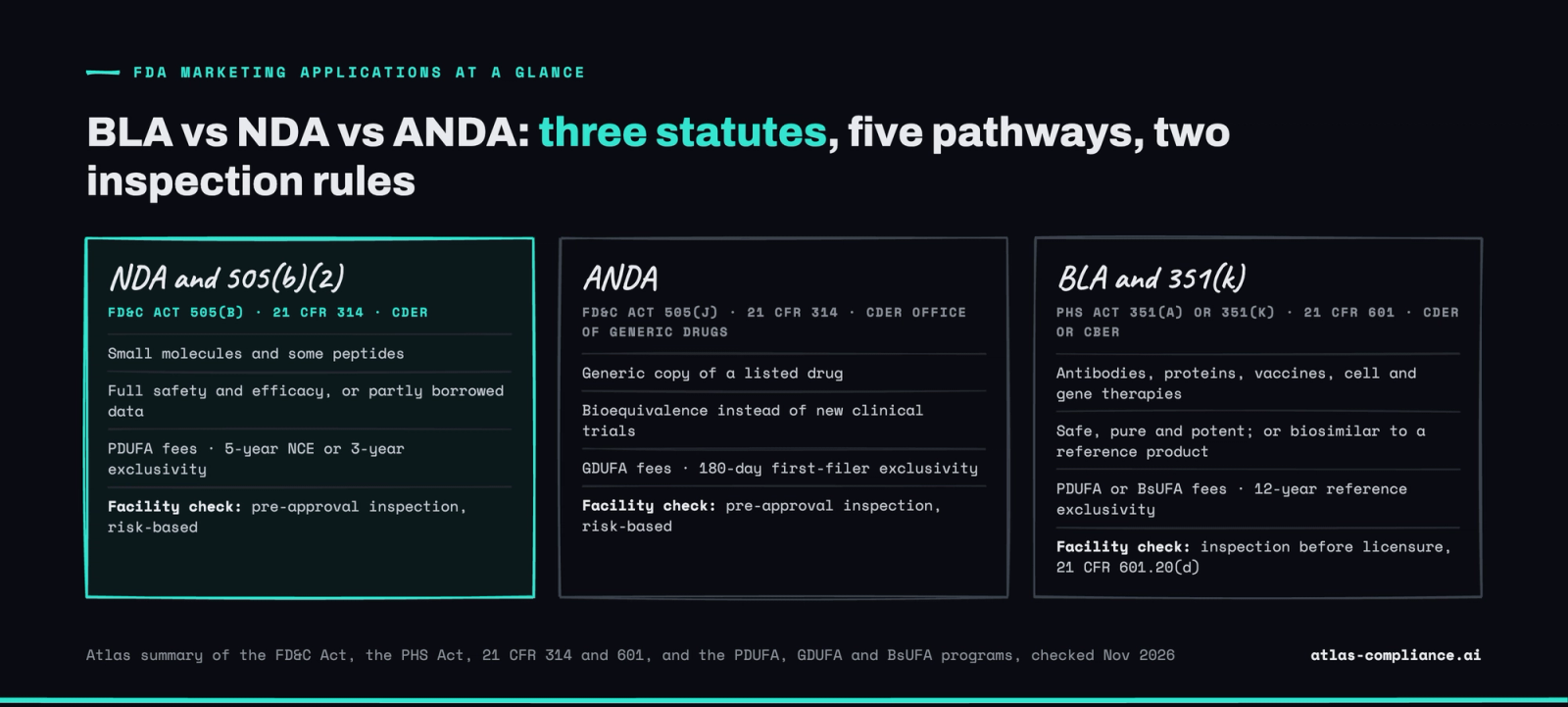
- An NDA is filed under FD&C Act section 505(b), an ANDA under 505(j), a BLA under PHS Act section 351(a) and a biosimilar under 351(k).
- CDER reviews NDAs, ANDAs and most therapeutic biologics; CBER reviews vaccines, blood products, and cell and gene therapies.
- A new chemical entity gets 5 years of exclusivity; a reference biologic gets 12 years from first licensure.
- 21 CFR 601.20(d) ties every BLA approval to an inspection of the establishment; NDA and ANDA pre-approval inspections are risk-based.
- In the Atlas analysis of published complete response letters (October 14, 2026), BLAs drew 20 of 48 letters in 2025, up from 21 of 65 in 2024, and 42 of the 65 letters from 2024 cited facility inspection problems.
What is the difference between a BLA and an NDA?
The difference between a BLA and an NDA is the type of product and the law behind it. An NDA covers drugs made by chemical synthesis and is approved under the FD&C Act after FDA finds the drug safe and effective. A BLA covers products made from living systems and is licensed under the PHS Act after FDA finds the product safe, pure and potent.
The practical consequences follow from that split. An NDA holder lists its drug in the Orange Book, faces generic competition through ANDAs and gets 5 years of new chemical entity exclusivity. A BLA holder lists its product in the Purple Book, faces biosimilars through 351(k) applications and gets 12 years of reference product exclusivity. The manufacturing rules differ too: a biologic is defined by its process, so the license covers the facility and process, and changes to either go through FDA as supplements.
Both applications go to FDA in eCTD format, both pay PDUFA user fees, and new molecular entity NDAs and original BLAs share the same review program and goal dates.
How do NDA, 505(b)(2), ANDA, BLA and biosimilar applications compare?
NDA, 505(b)(2), ANDA, BLA and 351(k) applications differ on six points: the statute, the FDA center, the evidence FDA expects, the exclusivity they earn, the user fee program and the review clock. The table sets them side by side.
| Pathway | Statute and rule | FDA center | Evidence | Exclusivity it can earn | User fees | Standard review goal |
|---|---|---|---|---|---|---|
| NDA | FD&C Act 505(b)(1), 21 CFR 314 | CDER | Full safety and efficacy studies | 5-year NCE, 3-year new clinical study, 7-year orphan | PDUFA | 10 months after the 60-day filing date for a new molecular entity |
| 505(b)(2) | FD&C Act 505(b)(2), 21 CFR 314 | CDER | Some studies the applicant did not run, such as published data or FDA's findings for a listed drug | Usually 3-year new clinical study | PDUFA | 10 months from receipt for most |
| ANDA | FD&C Act 505(j), 21 CFR 314 | CDER, Office of Generic Drugs | Bioequivalence to a reference listed drug | 180-day first-filer exclusivity | GDUFA | 10 months for a standard original ANDA |
| BLA | PHS Act 351(a), 21 CFR 601 | CDER or CBER | Safe, pure and potent | 12-year reference product, 7-year orphan | PDUFA | 10 months after the 60-day filing date |
| Biosimilar | PHS Act 351(k), 21 CFR 601 | CDER or CBER | Highly similar to a reference product, no clinically meaningful differences | First interchangeable exclusivity | BsUFA | 10 months after the 60-day filing date |
Priority review shortens the NDA and BLA goal to 6 months. The rules for each pathway sit in 21 CFR Part 314 for drugs and 21 CFR Part 601 for biologics.
What is a 505(b)(2) application?
A 505(b)(2) application is an NDA that relies, at least in part, on safety or efficacy data the applicant did not generate and has no right to reference, such as published studies or FDA's earlier findings for an approved drug. Companies use it for a new dosage form, route, strength or combination of an approved drug.
A 505(b)(2) sits between a full NDA and an ANDA. The applicant runs the bridging studies that show its change is safe and effective, and borrows the rest. Because it is legally an NDA, it pays PDUFA fees, lists in the Orange Book, can earn 3 years of exclusivity for new clinical studies, and carries the same pre-approval inspection risk as any other NDA.
Is a biosimilar the same as a generic drug?
A biosimilar is not the same as a generic drug. A generic, approved through an ANDA, must contain the same active ingredient as its reference drug and show bioequivalence. A biosimilar, approved through a 351(k) application, must be highly similar to its reference biologic with no clinically meaningful differences, because a large protein made in living cells cannot be copied atom for atom.
The evidence package shows the gap. An ANDA rests mainly on chemistry and a bioequivalence study. A 351(k) application needs analytical similarity data, animal data where relevant, and clinical pharmacology studies, and FDA can designate it interchangeable, which lets a pharmacist substitute it under state law. A 351(k) cannot be submitted until 4 years after the reference product's first licensure, or approved until 12 years after it.
Which FDA center reviews a BLA?
CDER reviews BLAs for therapeutic biologics, including monoclonal antibodies and most therapeutic proteins, which moved from CBER to CDER in 2003. CBER reviews BLAs for vaccines, blood and blood components, allergenics, and cell and gene therapies. The CDER explainer covers the drug center's offices.
The line between the two applications also moved. On March 23, 2020, under the Biologics Price Competition and Innovation Act, FDA deemed products such as insulins and human growth hormone, which had been approved under NDAs, to be licensed BLAs. Those products left the Orange Book for the Purple Book, and their copies now come through the biosimilar pathway. Products that combine a biologic with a device or drug follow FDA's combination product rules, which assign a lead center by primary mode of action.
What inspection does each application trigger?
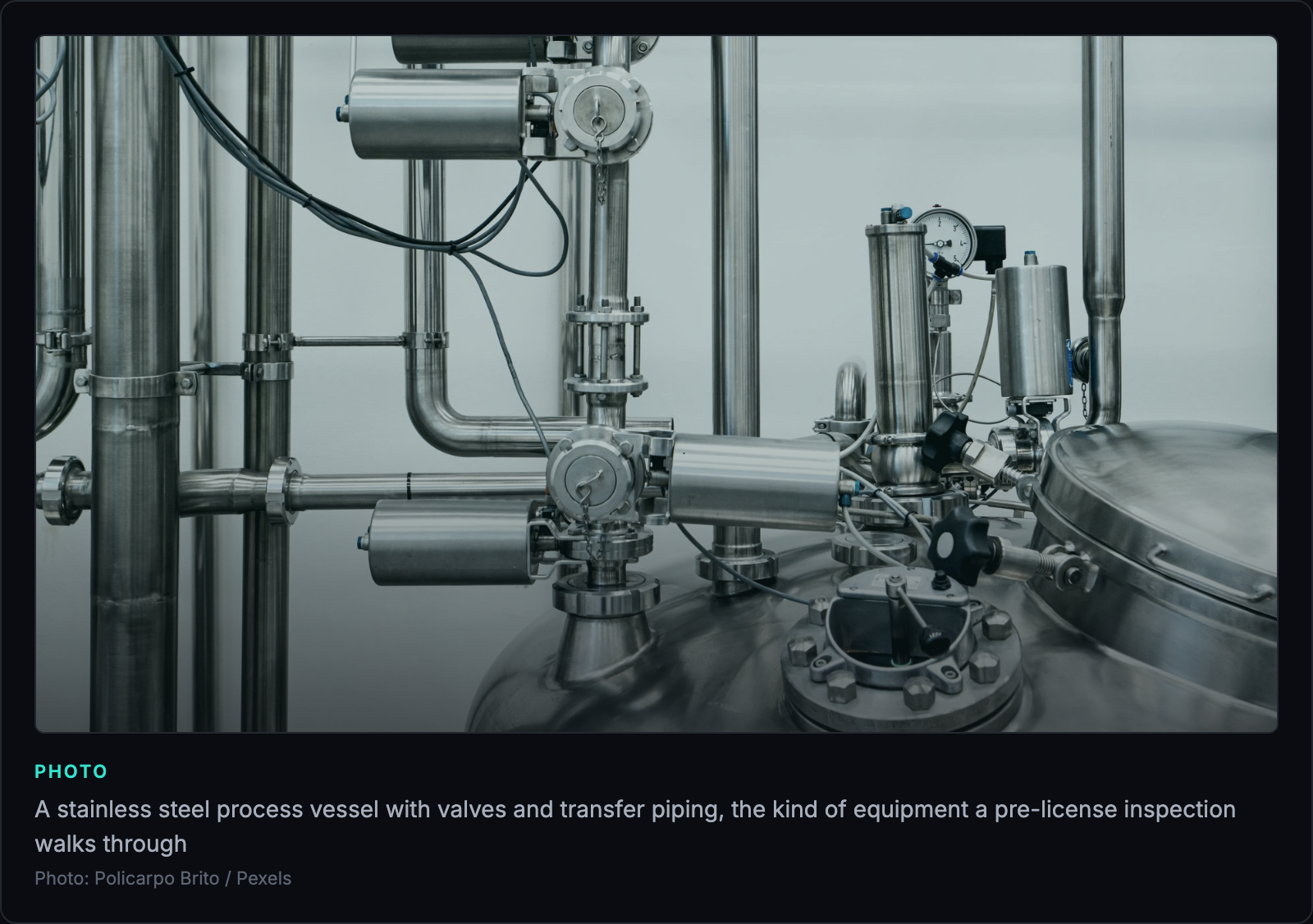
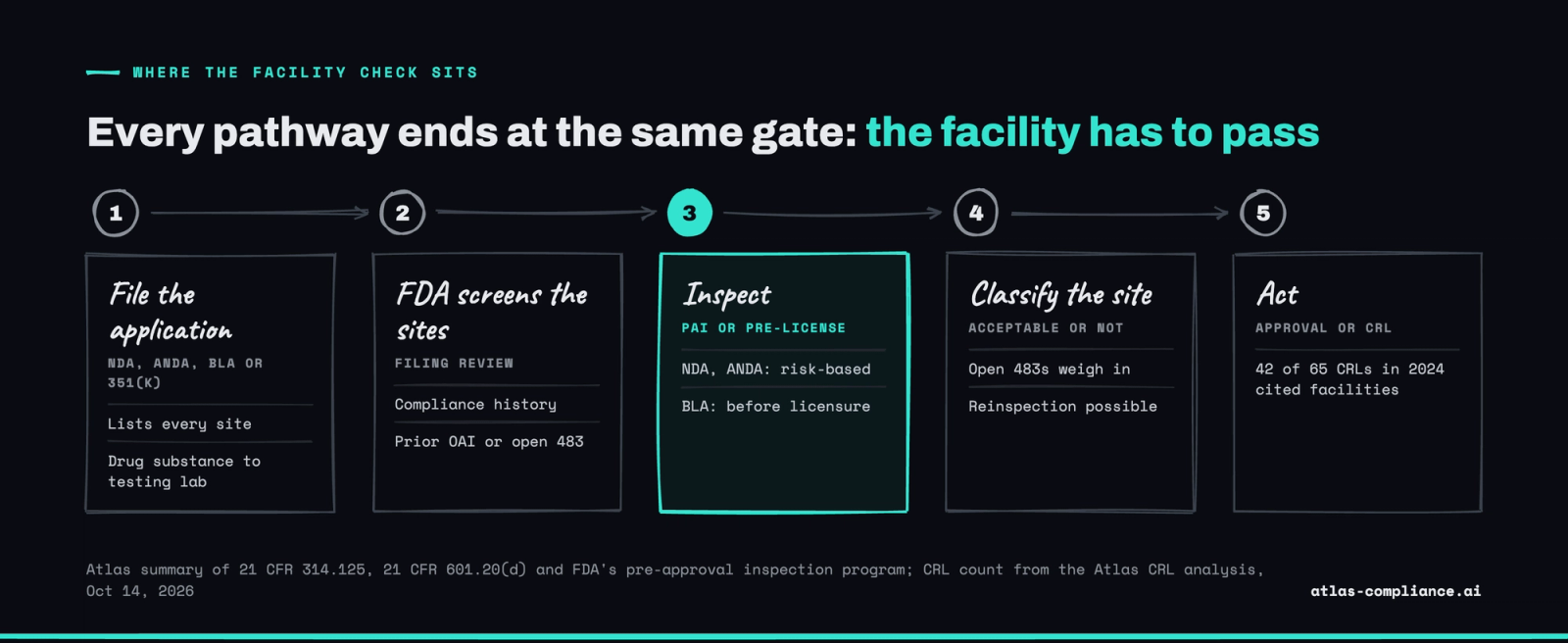
Every application triggers a facility check before approval, but the rule differs by pathway. For a BLA or 351(k) application, 21 CFR 601.20(d) says FDA issues a license only after inspecting the establishment, so a pre-license inspection is the default. For an NDA, 505(b)(2) or ANDA, FDA decides case by case under its pre-approval inspection program (Compliance Program 7346.832).
- The application lists every facility involved: drug substance, drug product, packaging, and the labs that test release and stability samples.
- FDA reviews each facility's compliance history: prior OAI classifications, open Form 483 observations, recent warning letters.
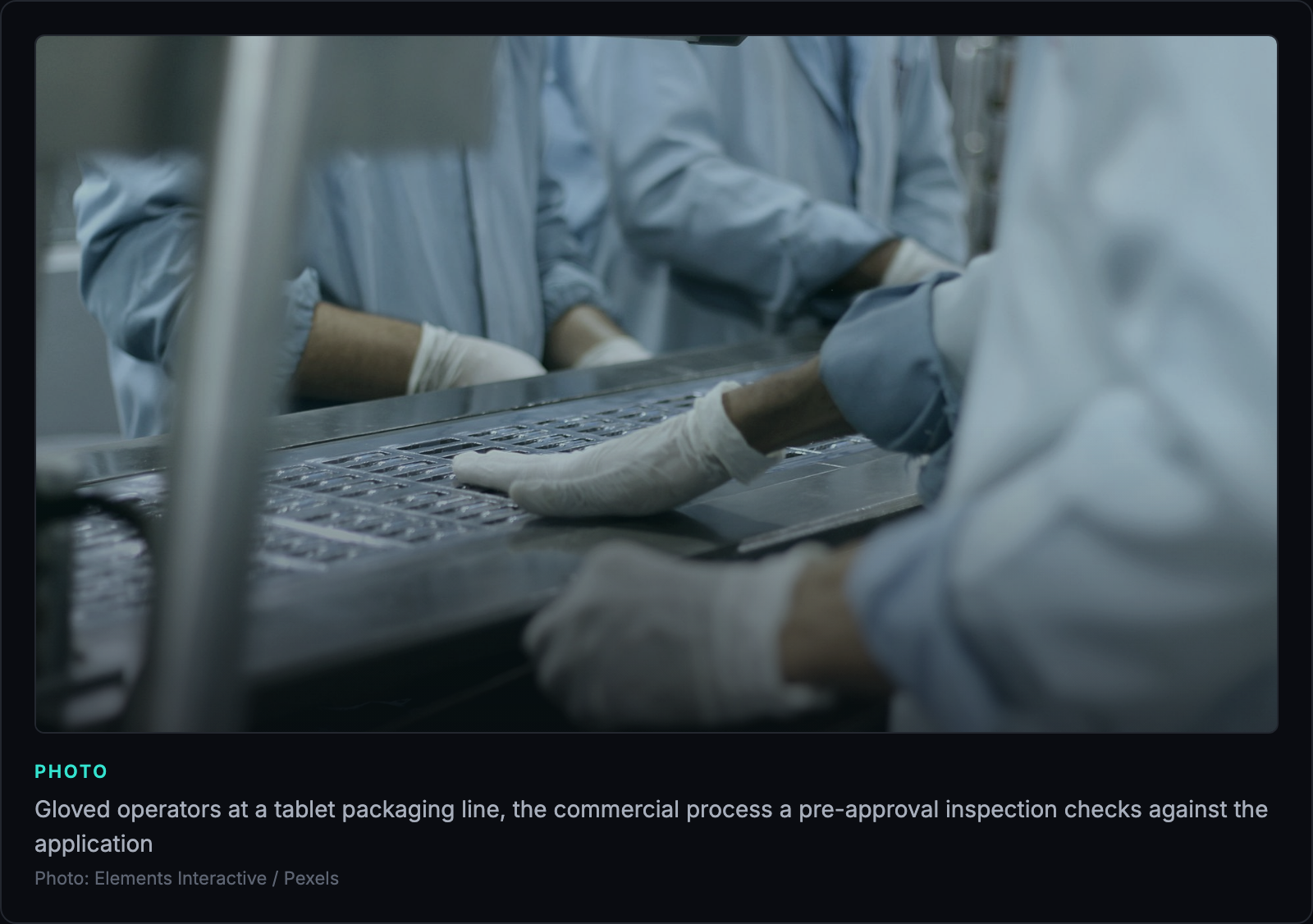
- FDA inspects the sites it cannot clear on history alone. A pre-approval inspection checks readiness for commercial manufacturing, conformance to the application, and the integrity of the submitted data.
- FDA classifies each facility as acceptable or not. An open Form 483 at a named site weighs on that decision even when the site belongs to a contract manufacturer.
- FDA approves the application or issues a complete response letter.
The generic program builds the same dependency into its clock. Under GDUFA III, FDA can extend the goal date for a standard or priority original ANDA to 15 months when a facility named in it is not ready for inspection. Our guide to preparing for an FDA pre-approval inspection covers what investigators ask for on site.
How often do facility problems stop an NDA or BLA?
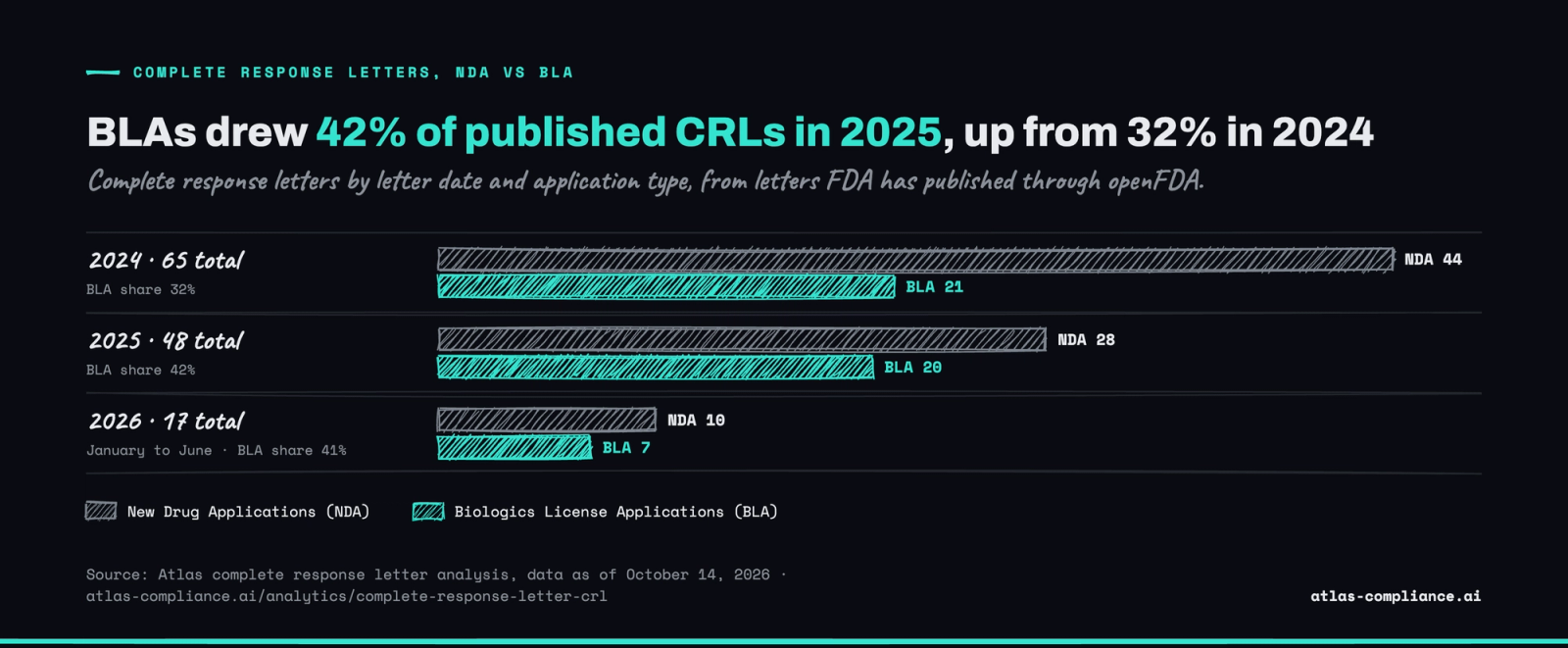
Facility problems appeared in 42 of the 65 complete response letters FDA issued in 2024, about two in three. In the Atlas complete response letter analysis of letters FDA published through openFDA (data as of October 14, 2026), 42 of the 65 letters issued in 2024 cited facility inspection problems.
The split by application type has shifted toward biologics. BLAs drew 21 of the 65 published letters in 2024 (32%), 20 of 48 in 2025 (42%) and 7 of 17 from January to June 2026 (41%). The count covers NDAs and BLAs; FDA has not published ANDA letters in the same set.
The facility in a biologics CRL is often a contractor. Regeneron's 2025 letters, covered in our Regeneron Form 483 analysis, traced to an inspection of a contract filler, Catalent Indiana in Bloomington. The sponsor received the letter; the filler received the Form 483. If a site in your filing carries a recent Form 483, you can see who inspected it and what they cited before FDA's reviewers weigh it.
 Atlas
See what the FDA knows about your next investigator.
30 minutes with the founder. No pitch deck.
How do drug and biologic inspection records compare?
Drug and biologic facilities end inspections very differently. Of 1,976 drug quality inspections that closed from January 2, 2025 to October 14, 2026, 310 (15.7%) were classified OAI, in FDA's published classifications. Of 2,015 inspections in CBER's biologics programs over the same window, 13 (0.6%) were OAI.
The biologics figure needs a caution. Blood establishments (1,188 inspections) and human cell and tissue firms (780) make up most of CBER's inspection count, and their inspections differ from a licensed manufacturer's. The 47 vaccine and allergenic inspections are closer to a BLA holder's experience: 24 of them (51.1%) ended VAI and none ended OAI. Antibody and protein makers reviewed by CDER are classified under the drug program, so they sit inside the 1,976 figure.
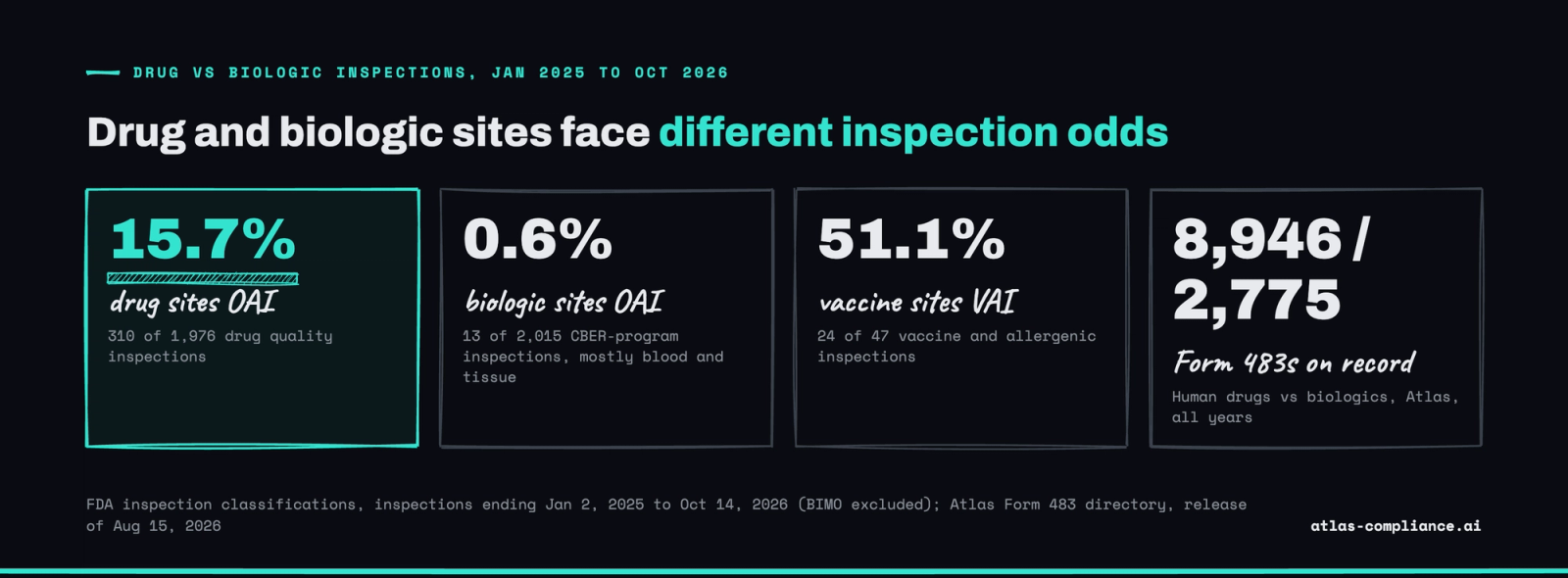
The citations differ as well. In the Atlas Form 483 citation dataset for the same period, 774 of 862 drug inspections with published citations cited 21 CFR Part 211, while 135 of 152 biologics inspections cited Part 606, the blood establishment CGMP rule. The FDA Form 483 database holds 8,946 human drug and 2,775 biologics Form 483s (release of August 15, 2026), including 755 and 269 issued in 2025.
A licensed vaccine maker shows how a BLA holder's record reads. Emergent Biodefense Operations Lansing has 16 FDA inspections on record in Atlas, 12 of which ended with a Form 483. The latest, a Form 483 issued June 30, 2026, cites 21 CFR 211.100(a), absence of written procedures. One of the two investigators named on it, Matthew J Gretkierewicz, has 316 inspections across 230 sites in his Atlas profile.
What should a sponsor check before filing an NDA, ANDA or BLA?
A sponsor should check the inspection record of every facility named in the application before filing, because FDA runs the same check during review.
- List every site in the application, including contract testing labs and drug substance makers.
- Pull each site's last three FDA classifications. An OAI in the past two years makes an inspection likely.
- Read each open Form 483 and confirm the response went to the FDA office named on it, with dates you can cite.
- Match the commercial process in the application to what the site runs today; a pre-approval inspection checks that conformance line by line.
- For a BLA, plan for the pre-license inspection in the timeline rather than treating it as a possibility.
- Name a backup site where a single facility carries a recent Form 483 history.
The NAI, VAI and OAI guide explains how to read each classification, and the Form 483 explainer covers the response window. To get the next analysis of new Form 483s and complete response letters when it goes live, subscribe to the Atlas digest.
AtlasFDA Inspection Intelligence Digest
We track every 483, EIR, and warning letter the moment it happens. Get the signals before they hit the FDA website.
Frequently asked questions
FDA aims to act on 90% of original BLAs within 10 months after the 60-day filing date under standard review, or 6 months after it under priority review, so about 12 or 8 months from submission. A complete response letter restarts the clock: a Class 1 resubmission has a 2-month goal and a Class 2 resubmission, which covers most facility problems, has a 6-month goal.

Written by
Bhavish Agarwal
Founder, Atlas
Bhavish Agarwal is the founder of Atlas and previously worked at Google and Microsoft. He has spent the past several years building regulatory data infrastructure for the pharmaceutical industry.