



Atlas Compliance Blog

Latest insights and updates from Atlas Compliance

How an FDA Guidance Monitoring Database Reduces Inspection Risk?
December 10, 2025

How an FDA Guidance Monitoring Database Reduces Inspection Risk?

Most FDA inspection risks don’t come from bad intent or poor-quality systems.They come from missed guidance updates, fragmented monitoring, and a lack of evidence that regulatory changes were tracked continuously. An FDA guidance monitoring database like Hedwig reduces this risk by: For pharma and life sciences companies, this shifts compliance from reactive to proactive. Why […]

Read More
What prevents teams from shifting from reactive to proactive compliance?
December 9, 2025

What prevents teams from shifting from reactive to proactive compliance?

Every compliance team wants to be proactive. They want to spot changes early, assess impact quickly, and act before an inspector raises an issue. Yet, in practice, most organizations remain stuck in reactive mode: a guidance change, an inspector finds a gap, and the team scrambles. This article explores the real reasons why proactive compliance […]

Read More
Are pharma companies ready for FDA audits of eLogs and digital batch records?
November 28, 2025

Are pharma companies ready for FDA audits of eLogs and digital batch records?

The shift from paper to electronic logs (eLogs) and electronic batch records (eBMRs) is accelerating across pharma manufacturing. While technology has matured, many companies are not yet fully inspection-ready. Common gaps include incomplete validation, weak access controls and audit trails, poor change control for computerized systems, inconsistent policies for metadata and data retention, and immature […]

Read More
Can LLM-based quality systems pass an FDA Part 11 audit?
November 28, 2025

Can LLM-based quality systems pass an FDA Part 11 audit?

Yes, but only with work, evidence, and a strong control framework. Large language model (LLM)-based tools can be part of a Part 11–compliant quality system if you treat them like any other computerized system subject to GxP: validate their intended use, control inputs and outputs, preserve data integrity (ALCOA+), maintain secure audit trails and user […]

Read More
Can AI-generated procedures or RCA reports be considered FDA-compliant?
November 28, 2025

Can AI-generated procedures or RCA reports be considered FDA-compliant?

AI can help generate procedures and Root Cause Analysis (RCA) reports, but AI-generated documents are not automatically “FDA-compliant.” Compliance depends on the system design, data provenance, human oversight, traceability, validation, and adherence to rules for records and CAPA. To be defensible during an FDA inspection, you must meet applicable regulations (e.g., 21 CFR Part 11 […]

Read More
How will AI-driven inspection models change FDA audits in the next 5 years?
November 28, 2025

How will AI-driven inspection models change FDA audits in the next 5 years?

AI-driven inspection models will enable FDA audits to be faster, more data-driven, and more focused on high-risk signals. Expect a hybrid inspection model over the next five years, where automated continuous monitoring and predictive risk scoring will guide remote regulatory assessments and targeted on-site inspections. Companies must invest in data quality, explainable AI, secure data […]

Read More
Top Repeat FDA Violations: What Keeps Getting Companies in Trouble?
November 27, 2025

Top Repeat FDA Violations: What Keeps Getting Companies in Trouble?

Repeat FDA violations keep showing up across drug, biologic, and device manufacturers because problems are systemic, including weak quality systems, sloppy data integrity, poor documentation, inadequate CAPA and training, and failures in environmental control and equipment qualification. These issues aren’t new, but they keep recurring because organizations often treat compliance as merely paperwork, rather than […]

Read More
What is the FDA’s new AI tool “Elsa” and how does it impact inspections?
November 26, 2025

What is the FDA’s new AI tool “Elsa” and how does it impact inspections?

The FDA’s new internal generative-AI assistant ELSA (Enterprise Language Support Assistant) is an agency-wide tool launched in June 2025 to help reviewers, investigators, and scientists read, summarize, and prioritize large volumes of regulatory and safety data faster. The agency reports use across clinical protocol review, adverse-event summarization, label comparison, and inspection targeting. Early rollout shows […]

Read More
How has the FDA’s approach to overseas inspections changed in 2024–2025?
November 26, 2025

How has the FDA’s approach to overseas inspections changed in 2024–2025?

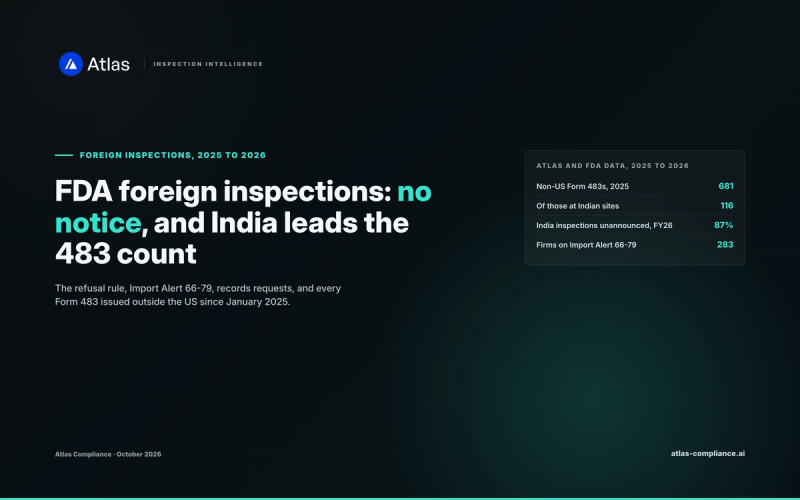
Between 2024 and 2025, the FDA shifted from pandemic-era stop–start inspection tactics to a sustained, more aggressive, data-driven, and technology-enabled oversight posture for foreign facilities. Key changes include increased foreign inspection coverage (with FY2024 showing a marked rise), formalization and expansion of remote regulatory tools (RRAs), pilot-to-policy rollout of unannounced foreign inspections, and the use […]

Read More
What documentation failures are being highlighted in 2024–2025 FDA inspections?
November 26, 2025

What documentation failures are being highlighted in 2024–2025 FDA inspections?

From 2024–2025 FDA inspections the single biggest theme in documentation failures is data integrity and poor recordkeeping, including missing, incomplete, or altered records that undermine confidence in test results and release decisions. Other common documentation failures include incomplete batch records, inadequate deviation and CAPA documentation, poor electronic records controls (Part 11 gaps), weak supplier documentation, […]

Read More